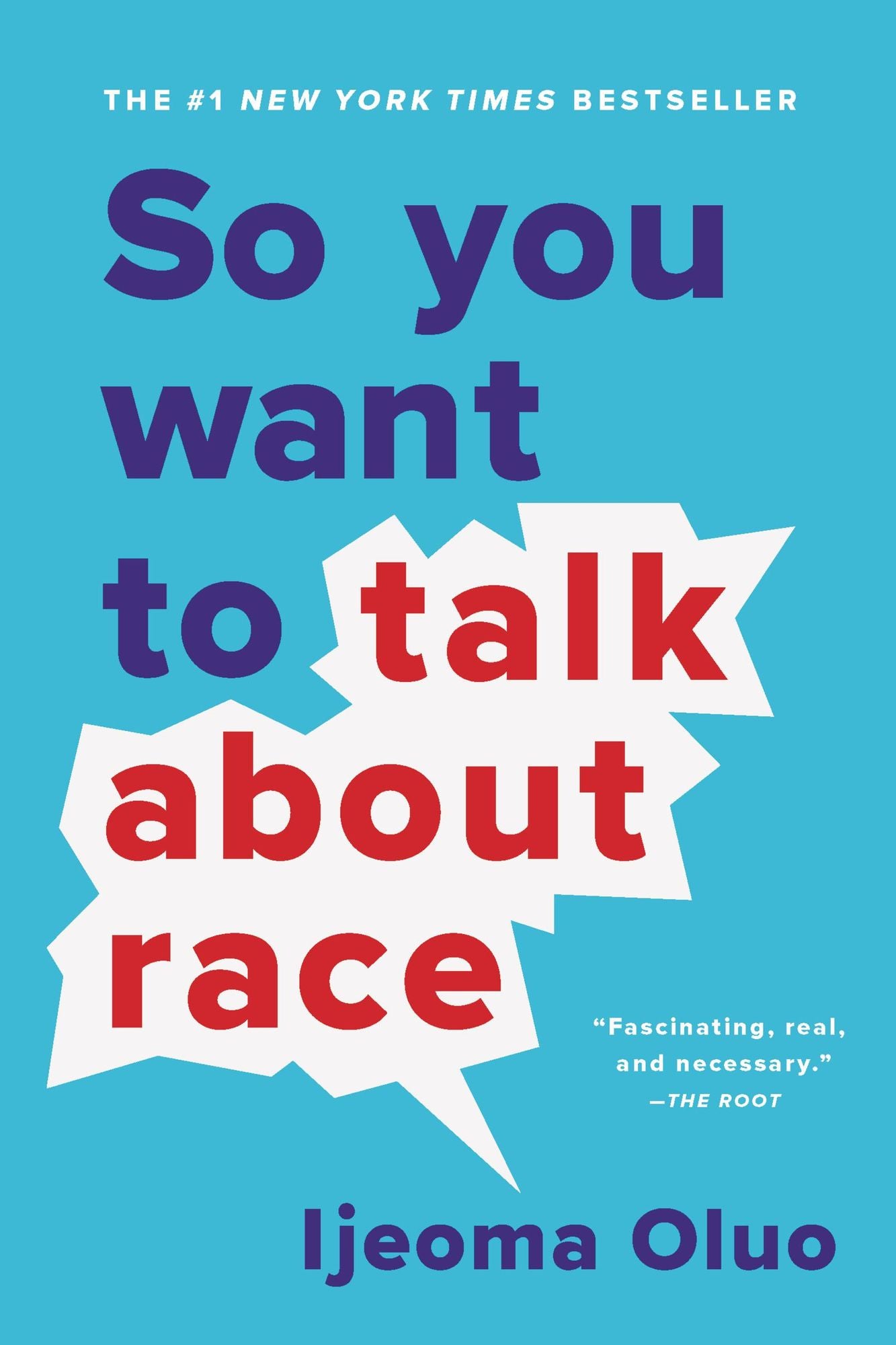
Ijeoma Oluo offers a hard-hitting, revelatory, and accessible examination of race in America.
“Read it, then recommend it to everyone you know.” —Harper’s Bazaar
Protests against racial injustice and white supremacy have galvanized millions around the world. The stakes for transformative conversations about race could not be higher. Still, the task ahead seems daunting, and it’s hard to know where to start. How do you tell your boss her jokes are racist? Why did your sister-in-law hang up on you when you had questions about police reform? How do you explain white privilege to your white, privileged friend?
In So You Want to Talk About Race, Ijeoma Oluo guides readers of all races through subjects ranging from police brutality and cultural appropriation to the model minority myth in an attempt to make the seemingly impossible possible: honest conversations about race and racism, and how they infect almost every aspect of American life.
"This was an exceptional read and the audio book even more so as it indues all the necessary inflection and soul to really connect to the text and move you to a place of introspection. It is highly informative and the topics discussed will have you continuing to learn about and refer to in daily life when having conversations with others. This book is a great starting point to learning about race and delve in deeper with additional reads, experiences and perspectives."
— Ellie1203 (5/5)
Translates talk into action
"Whenever I become overwhelmed in my personal life with the race problem, I try to read a book about racial issues to strengthen my intellectual and emotional strength to deal with this topic better. My choosing this book is a result of that. It addresses the race issue not from a theoretical angle but from a practical one, one borne out of life experiences. In 17 chapters, Oluo addresses common questions about race, like “Is police brutality really about race?”, “What are microaggressions?”, or “Why are our students so angry?” In each chapter, she begins by explaining her perspective on the question with personal reflections. Then she brings forth ideas for action in bulleted format before concluding. The whole production reads like 17 blog posts masquerading as chapters. The tone is engaging – never pretentious nor didactic. A particular strength lies in its applicability to the American political climate. Oluo studied political science in college, and she possesses much skill in translating talk into action. Though clearly liberal, she spends her words advocating for better relations among the races rather than just advocating for a party or an ideology. She wants real action for a better world, and she wants it now. The main weakness of the book is that so much of it is based on the author’s personal experiences as an African American in Seattle, Washington. This limits its applicability. Oluo acknowledges this shortcoming in a chapter on the Asian-American experience. This book’s greatest strength lies in its practicality from experience, but such practicality is also its main limitation. This book was first published in 2019 before the global pandemic and ensuing racial discord in America after George Floyd’s unnecessary death. Thus, it is in a prime position to address current concerns without being opportunistic. Those who follow American politics in the truest sense – how neighbors relate to one another – will benefit from reading her account. It focuses not on how to police one’s own talk but on how to really build a better world through our actions. As the world comes out of a pandemic, one can only hope that Olou’s work can bear much fruit."
— Scttjperarsn (4/5)
Needed learning and action
"This book has great personal illustrative stories and analogies that articulate concepts like racism, micro-aggressions, cultural appropriation, and the model minority myth. It challenges you with calls to action that address the roots of systemic racism and have the potential to create real change."
— Sandpiper7279 (5/5)
So you want to talk about race... look elsewhere
"I borrowed this audio book from my local library hoping to further educate myself on race issues and learn how to have more meaningful conversations on this important and often sensitive issue. What I found was a book filled with logical fallacy, near-sighted opinion and a miasma of identity politics that have little to do with race. Not surprisingly, the author quickly brushes off any criticism of her stance with the argument that "This is true, because I say it is true" rather than trying to provide evidence to support her claims. Interestingly, when I told a close friend (someone the author would classify as a person of color) that I had just finished listening to the book they said "I could have told you not to waste your time. " I gave the book two stars because I did learn something about identity, privilege and intersectionality. Whether those learnings were of any value is another story. I will also give the author credit for something stated at the outset, that the book would make me uncomfortable. While I'm not sure it made me uncomfortable, it did make me cringe, but likely not for the reasons the author intended. If you are looking for a book that will actually help equip you to have tough conversations on any number of issues (including race) I would recommend "Crucial Conversations: Tools for Talking When Stakes Are High" or "Crucial Confrontations: Tools for Resolving Broken Promises, Violated Expectations, and Bad Behavior" by Patterson, Grenny, McMillan, and Switzler. I also highly recommend several Thomas Sowell books including: "Discrimination and Disparities", "A Conflict of Visions: Ideological Origins of Political Struggles", and "Black Rednecks and White Liberals"."
— MattsMule (2/5)
Love the book but...
"She's very rude to anyone that's white who actually wants to help with change. She needs to realize there are people on this side that's sick and tired of it. It seems to me she wants to talk about race, as long as you're not white."